

 Oct 24, 2026
 3 min read
Most people who lose money in a casino do it while believing they're playing a game of skill. That's the dirty little secret of the iGaming industry: the h
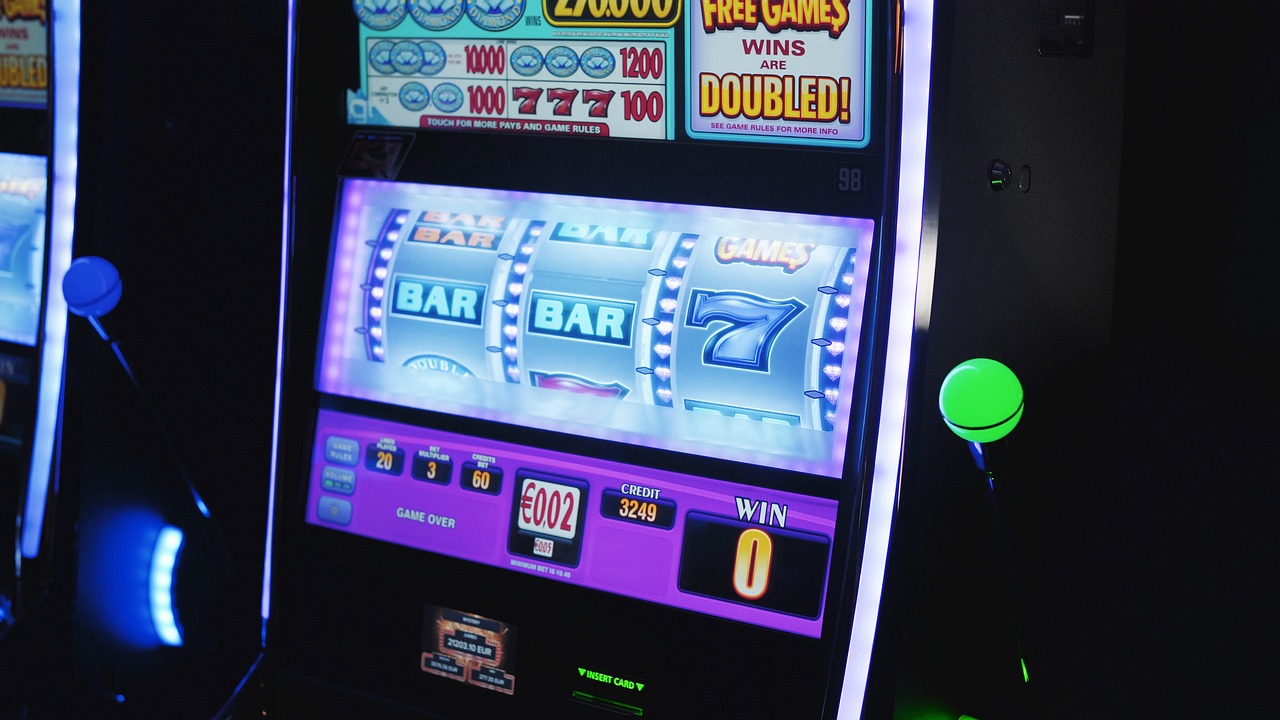
Most people who lose money in a casino do it while believing they're playing a game of skill. That's the dirty little secret of the iGaming industry: the house doesn't need to cheat, because the math already guarantees it a profit over time. But here's the thing - understanding how that math works is exactly what separates a casual gambler from someone who actually stands a chance. Let's dig into the mechanics across slots, poker, and sports betting, because they don't behave the same way at all.
Every casino game has a built-in advantage for the operator, called the house edge. On a European roulette wheel with a single zero, the edge is 2.7%. On American roulette, the extra double zero pushes that up to 5.26%. Those numbers sound small, but they compound brutally over hundreds of spins. Play a hundred $10 bets on European roulette and you'll lose about $27 on average, no matter how hot your streak feels.
Slots work differently. Instead of a fixed edge displayed upfront, they use RTP - Return to Player - a percentage that tells you how much of all wagered money a machine pays back over millions of spins. A slot with 96% RTP keeps 4% for the house. A 92% RTP slot keeps 8%. That four-point gap is massive. If you cycle $1,000 through a 92% slot, you're statistically giving the casino $80, versus $40 on the 96% machine. Same spins, double the bleed.
RTP is only half the story. Volatility (sometimes called variance) tells you how the payouts are distributed. Two slots with identical RTP can feel completely different:
Practical tip: match volatility to your bankroll. If you're sitting on $50, playing a high-volatility slot with a $2 spin will wipe you out before the bonus ever triggers. Drop to $0.20 spins or pick a low-volatility game. The math doesn't care how you feel about it.
Poker is the one game in the casino where skilled players have a long-term edge. Unlike slots, you're not playing against the house - you're playing against other people. The casino just takes a rake, usually 5% of the pot capped at a few dollars. That means a good player isn't fighting a negative expectation every hand; they're exploiting weaker opponents. Kèo nhà cái covers this in more detail.
The key metric is win rate, often measured in big blinds per 100 hands (bb/100). A solid winning micro-stakes player might average 3-5 bb/100. A crusher at high stakes might hit 8-10 bb/100 in softer lineups. Sounds tiny? At 100NL (blind levels of $0.50/$1), 5 bb/100 is $5 per hundred hands. Play four tables at 80 hands per hour each, and that's roughly $16/hour - modest, but it's positive. Compare that to any table game.
The catch: variance in poker is savage. You can play perfectly and lose ten buy-ins in a week. Bankroll management rules exist for a reason - most pros keep at least 50-100 buy-ins for cash games, and 100+ for tournaments.
Sports betting occupies a middle ground. You can absolutely outsmart the market, but only if you consistently know more than the closing line. The closing line - the odds just before kickoff - is the sharpest number available because it reflects all money and news in the market. Beating it long-term is the actual definition of a winning bettor.
Here's a quick framework sharp bettors use:
If I could tattoo one rule on every gambler's forehead, it would be this: stop chasing. Chasing losses is the single fastest way to turn a manageable dip into a disaster. The psychology is obvious - you want the money back, so you double your stake, switch to a higher-variance game, or start betting on things you don't understand. The math doesn't care. Your edge, if you have one, doesn't improve because you're frustrated.
Set session limits before you log in. Decide in advance what you're willing to lose and what profit target makes you walk away. Then stick to it. Boring? Absolutely. Profitable? Over years, yes. Every serious player I've spoken to treats gambling like a business with fixed costs and expected returns, not like a lottery ticket with entertainment perks.
The iGaming industry thrives on people who confuse luck with skill and hope with strategy. Slots are entertainment with a known cost - treat them that way. Poker rewards patience, discipline, and emotional control more than any fancy bluff. Sports betting rewards information and line awareness, not fan loyalty or gut feelings. None of this is glamorous, and none of it guarantees you'll win tonight. But understanding the actual mechanics - RTP, rake, closing lines, variance - at least means you're playing with open eyes. And in a space built on illusion, that's already an edge most people never bother to take.
Provide clear contact information, including phone number, email, and address.

This post covers tips on color schemes, fonts, and visuals to keep your profile visually appealing and cohesive.
 Sep 21, 2026

Gen Z is reshaping digital interaction. Learn what matters to this generation and how to create authentic, meaningful content.
Sep 16, 2026

Gen Z is reshaping digital interaction. Learn what matters to this generation and how to create authentic, meaningful content.
Sep 12, 2026
Unlock the tools and insights you need to thrive on social media with Nor Thern Hearth. Join our community for expert tips, trending strategies, and resources that empower you to stand out and succeed.

Nor Thern Hearth is your hub for the latest in digital innovation, technology trends, creative insights. Our mission is to empower creators, businesses, valuable resource.
© 2026 Northern Hearth. All rights reserved.


Tags
Matthew Kuhnemann
8/2/2024
“I love how this breaks down the importance of consistency and authenticity. It's easy to get caught up in trends, but staying true to yourself really is key. Great read!"